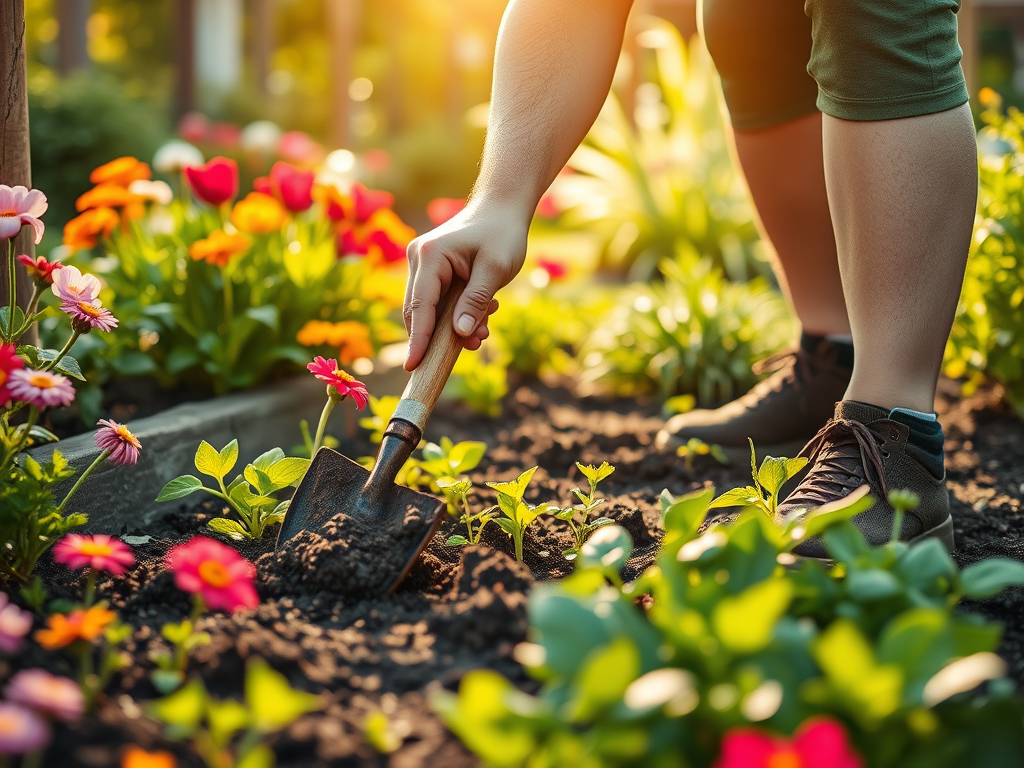
How Gardening Keeps You Moving
Gardening is often seen as a relaxing hobby, but it can also be a robust workout that combines the beauty of nature with the benefits of physical activity.
Embracing gardening as a part of your active lifestyle can transform your health, well-being, and environment.
This guide will explore how to stay active while gardening, review the benefits of fitness and gardening, and provide practical examples of incorporating fitness into your outdoor garden.
Gardening involves various physical activities that can provide a full-body workout.
Here’s how you can stay active while tending to your garden:
1. Digging & Shoveling
Digging and shoveling are integral parts of preparing and maintaining your garden beds.
The repetitive motion of lifting soil and moving it around engages your core and strengthens your upper and lower body.
Muscles Worked:
Core, legs, and arms
2. Weeding & Pruning
Weeding and pruning require reaching, pulling, and squatting, which can improve your flexibility and balance.
These actions engage the muscles in your upper body and help maintain joint health.

Muscles Worked:
Shoulders, arms, and back
3. Raking & Hoeing
Raking leaves or hoeing the soil involves repetitive movements that can improve cardiovascular health and tone your upper body.

The back-and-forth motion works out your shoulders, arms, and back.
Muscles Worked:
Arms, shoulders, and back
4. Planting & Transplanting
Planting seeds or transplanting seedlings involves bending, squatting, and stretching.
These activities engage your core and lower body, promoting flexibility and strength.

Muscles Worked:
Core, legs, and arms
5. Watering
Carrying watering cans or using a hose to water your garden requires arm strength and coordination.

This activity can serve as a gentle upper-body workout.
Muscles Worked:
Arms, shoulders, and back

The Benefits of Wellness Gardening
Combining wellness with gardening offers a range of benefits for your physical fitness and mental well-being. Here are some key advantages:
1. Physical Fitness
Gardening can improve your overall physical health in several ways:
Creative Cardio:
Activities like digging, raking, and mowing can increase your heart rate and provide a good cardiovascular workout.
Strength & Endurance:
Lifting, bending, and squatting while gardening can build muscle strength and improve endurance.
Flexibility & Balance:
Reaching for plants, bending to weed, and stretching to prune can enhance your flexibility and balance.
2. Mental Health
Gardening also offers numerous mental health benefits:
Stress Reduction:
Spending time in nature and engaging in repetitive, mindful tasks can reduce stress levels.
Mood Improvement:
Physical activity and exposure to sunlight increase the production of serotonin, a mood-boosting hormone.
Cognitive Function:
Planning and maintaining a garden stimulates the brain, improving cognitive functions and memory.
3. Nutritional Benefits
Growing your own fruits, vegetables, and herbs ensures a fresh supply of nutritious produce:
Healthy Eating:
Homegrown produce is often more nutritious and flavorful than store-bought options.
Sustainability:
Growing your own food reduces the carbon footprint associated with transporting produce.
4. Environmental Impact
Gardening positively impacts the environment:
Biodiversity:
Planting a variety of plants supports local wildlife and promotes biodiversity.
Pollution Reduction:
Plants absorb carbon dioxide and other pollutants, improving air quality.

Incorporating Fitness into Your Garden Routine
To maximize the fitness benefits of gardening, you can incorporate specific exercises and routines into your gardening activities.

Here are some practical examples:
1. Warm-Up & Stretching
Activity:
Before starting your gardening tasks, spend 5-10 minutes warming up and stretching.
Exercises:
Gentle stretches for your arms, legs, and back can prevent injuries and improve flexibility.
2. Garden Yoga
Activity:
Incorporate yoga poses into your gardening routine to enhance flexibility and balance.
Examples:
Poses like the Downward Dog, Tree Pose, and Child’s Pose can be easily integrated while taking breaks from gardening tasks.
3. Garden Laps
Activity:
Use your garden as a track for walking or jogging laps.
Exercise:
Set a timer for 10-15 minutes and walk or jog around your garden, enjoying the scenery while getting your steps in.
4. Squat Gardening
Activity:
Incorporate squats into your planting and weeding routines.
Exercise:
Instead of bending over, squat down to reach plants or pull weeds. This engages your leg muscles and improves lower body strength.
5. Garden Resistance Training
Activity:
Use gardening tools and objects as makeshift weights for resistance training.
Exercise:
Perform bicep curls with a watering can, tricep extensions with a spade, or shoulder presses with a small plant pot.
6. Interval Gardening
Activity:
Combine high-intensity gardening tasks with short breaks for a cardio workout.
Exercise:
Alternate between activities like digging or raking (high intensity) and lighter tasks like watering or planting (low intensity) for a balanced workout.
7. Cool-Down & Relaxation
Activity:
After finishing your gardening tasks, spend a few minutes cooling down and relaxing.
Exercises:
Gentle stretching and deep breathing exercises can help your body recover and reduce muscle soreness.

Creating a Fitness-Friendly Garden Space
Designing your garden with fitness in mind can make it easier to incorporate physical activity into your routine.
Here are some tips for creating a fitness-friendly garden space:
1. Paths & Walkways
Design:
Create clear paths and walkways for easy movement and walking laps.
Material:
Use materials like gravel, stone, or wood chips to create stable and attractive paths.
2. Raised Beds & Vertical Gardens
Design:
Use raised beds and vertical gardens to reduce the need for bending and reaching.
Benefits:
These structures make gardening more accessible and can be used to grow a variety of plants.
3. Exercise Stations
Design:
Incorporate designated areas for exercise into your garden layout.
Examples:
Set up a small area with a yoga mat for stretching or place a bench for seated exercises.
4. Multi-Functional Spaces
Design:
Create multi-functional spaces that can be used for both gardening and fitness.
Examples:
A patio can serve as a space for potted plants and also as an area for yoga or resistance training.
5. Relaxation Zones
Design:
Include areas for relaxation and mindfulness in your garden.
Examples:
A hammock, garden bench, or meditation corner can provide a place to unwind and enjoy the fruits of your labor.

Sample Garden Fitness Routine
Here’s a sample routine to help you get started with incorporating fitness into your gardening activities:
Warm-Up
(5-10 minutes)
- Arm circles
- Leg swings
- Gentle stretching
Gardening Tasks
(30-45 minutes)
- Digging and shoveling: 10-15 minutes
- Weeding and pruning: 10-15 minutes
- Raking and hoeing: 10-15 minutes
Fitness Exercises
(15-20 minutes)
- Squat gardening: 3 sets of 10-15 squats while planting or weeding
- Garden laps: 10-15 minutes of walking or jogging around the garden
- Resistance training: 3 sets of 10-15 reps of bicep curls with a watering can, tricep extensions with a spade, and shoulder presses with a plant pot
Cool-Down
(5-10 minutes)
- Gentle stretching
- Deep breathing exercises
Flourish with Garden Fitness
Gardening is more than just a hobby; it’s a dynamic way to stay active and improve your overall health.
By integrating fitness into your gardening routine, you can enjoy the benefits of physical exercise, mental well-being, and fresh, homegrown produce.
Whether you’re digging, planting, or simply walking through your garden, every moment spent in your green oasis contributes to a healthier and happier you.
So, grab your gloves, head outdoors, and let your garden be the gym where you cultivate both plants and personal fitness.
More Guides


Leave a Reply