In this guide

One of the first things we love to do as spring approaches is begin prepping our garden beds for the upcoming grow season.
Creating a vibrant and productive garden starts with proper preparation of your garden beds.


Whether you’re a seasoned gardener or just starting out, knowing how to ready your soil for sowing seeds is essential for a successful harvest.
In this guide, we’ll explore steps you can take towards preparing nutrient rich garden beds, from soil testing to bed layout and amendment.

Understanding Your Soil
Before diving into bed preparation, it’s crucial to understand your soil’s composition and pH level.
Different plants thrive in varying soil conditions, so conducting a soil test can provide valuable insights into its nutrient levels and acidity.
You can purchase DIY soil testing kits online or at your local hardware store. Or, you can send samples to a local agricultural extension service for analysis.


Once you have your results, you’ll be equipped to make informed decisions about soil amendments and fertilizers.
Clearing & Planning
Your Garden Beds
With soil analysis in hand, it’s time to clear your garden beds of debris, weeds, and any unwanted vegetation.


Use a garden fork or shovel to loosen compacted soil and remove rocks or roots that may impede root growth.
Next, consider the layout of your garden beds.

Optimal bed width is typically around 3 to 4 feet, allowing for easy access and maintenance from both sides.
Amending Your Soil
Now comes the fun part – enriching your soil with organic matter and nutrients to support healthy plant growth.

Begin by incorporating compost, aged manure, or organic matter into the top 6 to 8 inches of soil.
These amendments improve soil structure, increase water retention, and provide essential nutrients for plant uptake. Aim for a soil texture that’s loose, crumbly, and well-draining.
Balancing Soil pH
Soil pH plays a crucial role in nutrient availability and plant health. Most vegetables prefer slightly acidic to neutral soil with a pH range of 6.0 to 7.0.

If your soil test indicates pH imbalances, you can adjust it by adding lime to raise pH or sulfur to lower pH levels.
Follow recommended application rates based on your soil test results and retest periodically to monitor pH changes over time.
Addressing Soil Compaction
Compacted soil restricts root growth and impedes water infiltration, leading to poor plant performance.
To alleviate compaction, use a garden fork or broadfork to gently loosen the soil without disturbing its structure.

Incorporating organic matter and practicing no-till gardening techniques can help prevent future compaction issues.
Avoid tilling excessively, as it can disrupt beneficial soil organisms and contribute to erosion.

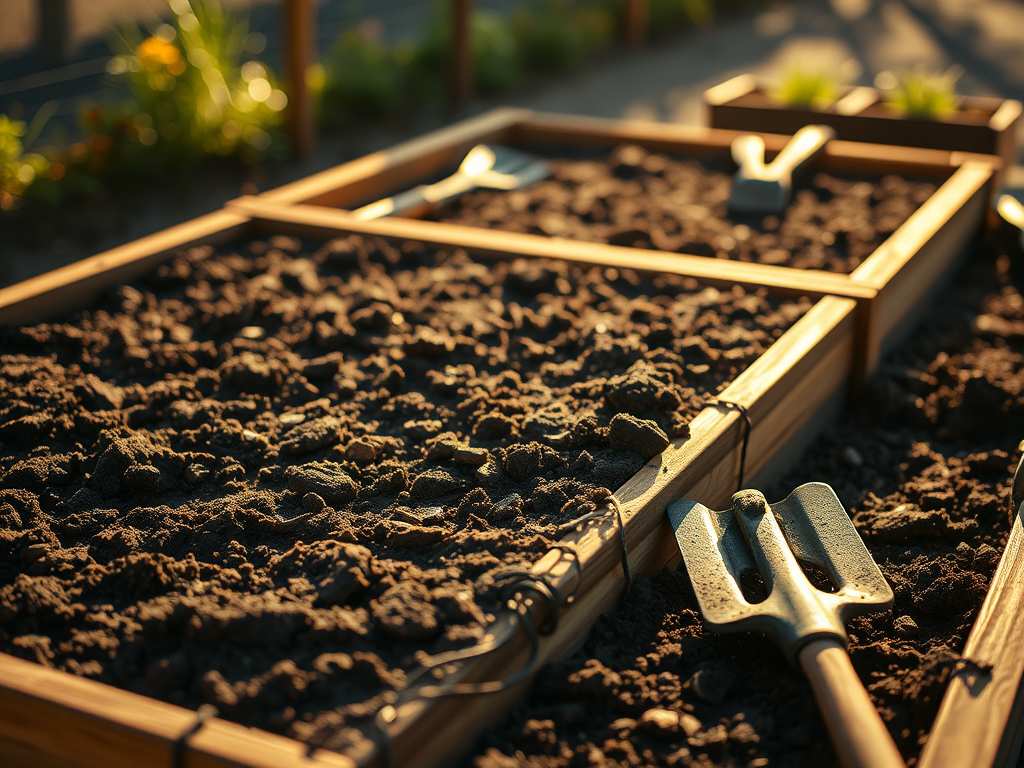
Creating Raised Beds
Raised beds offer numerous advantages for gardeners, including improved drainage, better soil aeration, and defined planting areas.
Construct raised beds using untreated lumber, bricks, or recycled materials, ensuring a depth of at least 6 to 12 inches for adequate root development.


Fill raised beds with a nutrient-rich soil mix consisting of equal parts compost, topsoil, and perlite or vermiculite for drainage.

Mulching
Mulching is a simple yet effective way to conserve moisture, suppress weeds, and regulate soil temperature in your garden beds.

Apply a layer of organic mulch such as straw, wood chips, or shredded leaves to the soil surface, leaving a few inches of space around plant stems to prevent rot.
Visit our guide on Enhancing Your Garden with Mulching to learn more and get step by step tips on how to protect your garden beds and plants.


Mulch also adds organic matter to the soil as it decomposes, further enhancing its fertility and structure.
Watering
Proper watering is key to establishing healthy root systems and promoting robust plant growth.

Water your garden beds deeply and consistently, aiming to moisten the soil to the root zone without causing waterlogging.
Consider installing drip irrigation or soaker hoses to deliver water directly to the plant roots while minimizing evaporation and runoff.

Additionally, avoid walking on wet soil to prevent compaction and soil erosion.
Protecting Your Garden Beds
To deter pests and protect young seedlings, consider installing physical barriers such as wire fencing, row covers, or netting over your garden beds.
Visit our DIY guide on How To Construct Garden Cages with Fencing Wire for steps on how to create barriers for your garden.

These barriers help shield plants from hungry insects, birds, and browsing wildlife without the need for chemical pesticides.

Monitor your garden beds regularly for signs of pest damage and intervene promptly to prevent infestations from spreading.

Preparing garden beds for sowing seeds and transplanting is a labor of love that sets the stage for a bountiful harvest.
By understanding your soil, incorporating organic amendments, and practicing proper bed management techniques, you can create an environment where plants thrive and flourish.

Remember, gardening is a journey of discovery and experimentation, so don’t be afraid to get your hands dirty and learn from both successes and challenges along the way.
More Guides


Leave a Reply