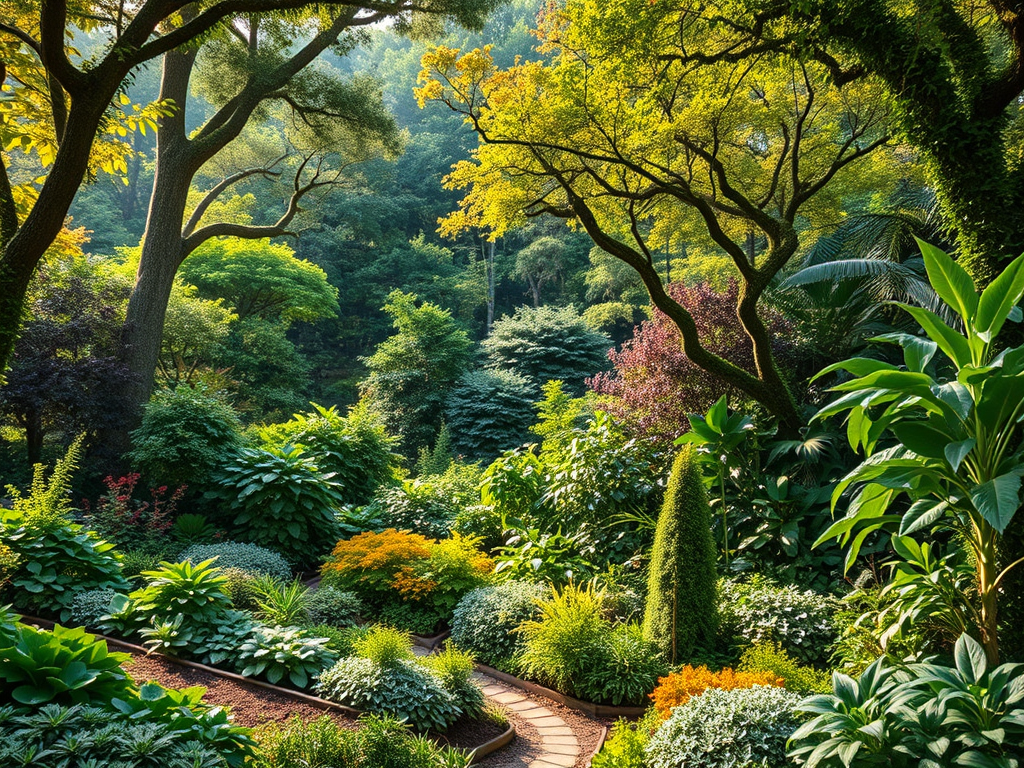
Explore this guide…
- A Guide to Sustainable Food Forest Design
- Permaculture: The Foundation of Food Forests
- Components of a Plant Guild
- Functions of Guild Members
- Site Assessment
- Designing the Layout
- Plant Selection
- 7 Practical Steps –
- Benefits
- Disadvantages
- Rewards Summary

A Guide to
Sustainable Food Forest Design
Food forests, also known as forest gardens, are an innovative and sustainable approach to gardening and agriculture.
They mimic the natural ecosystems of forests to create a productive and self-sustaining landscape that provides food, habitat, and ecological benefits.

In this guide, we will explore the basics of food forest design, including:
- Permaculture Principles
- Plant Guilds
- Design Fundamentals
- How to Get Started
- Benefits and Disadvantages

Permaculture:
The Foundation of Food Forests
Permaculture is a term coined by Bill Mollison and David Holmgren in the 1970s and it is a design philosophy that emphasizes working with nature rather than against it.
The concepts of permaculture aims to create sustainable and resilient systems by mimicking natural ecosystems.

Permaculture principles are the foundation of food forest design, guiding the creation of landscapes that are diverse, productive, and regenerative.

12 Principles of Permaculture
1. Observe & Interact
Understanding the natural patterns and processes of your site is crucial.

Spend time observing the land, weather, and existing ecosystems before making any design decisions.
2. Catch & Store Energy
Utilize renewable resources like sunlight and rainwater.

Design systems to capture and store these energies efficiently, such as using rain barrels or solar panels.
3. Obtain a Yield
Ensure that the systems you design provide tangible benefits, such as food, fuel, fiber, or other resources.
4. Monitor & Adjust
Continuously monitor your systems and be willing to make adjustments based on what works and what doesn’t.

5. Utilize Renewable Resources
Prioritize the use of resources that can be replenished, and value the ecosystem services provided by nature, like pollination and soil fertility.
6. Produce No Waste
Design systems that recycle nutrients and materials, minimizing waste production.

Learn how to create your own compost from kitchen scraps and different materials from your garden on our free guide: Turning Waste Into Garden Gold
7. Design from Patterns to Details
Start with the big picture and gradually work down to the specifics of your food forest.

Recognize large-scale patterns and use them to inform detailed design decisions.
8. Integrate Plants
Promote beneficial relationships between elements in your system to create a cohesive and interconnected landscape.
9. Use Small & Slow Solutions
Start small and build gradually.

Small-scale solutions are easier to maintain and can be more effective in the long run.
10. Diversify
Biodiversity enhances resilience and productivity.

Incorporate a variety of species and practices to create a robust system.
11. Use Edges & Transitions
Edges, or the transition zones between different ecosystems, are often the most productive areas. Utilize these spaces effectively.
12. Creatively Respond to Change
Embrace the changes of the seasons as opportunities for innovation and adaptation.

Plant Guilds:
Building Blocks of a Food Forest
Plant guilds are groups of plants that work together synergistically, much like the layers of a natural forest.
Each plant in a guild plays a specific role, contributing to the overall health and productivity of the system.
Understanding and designing plant guilds is a crucial aspect of food forest design.
Components of a Plant Guild
Canopy Trees
These are the tallest plants in the guild, providing shade and shelter for the lower layers.

Examples include fruit and nut trees like apples, pears, and walnuts.
Understory Trees
Smaller trees that thrive in the partial shade of the canopy.

Examples include dwarf fruit trees and nitrogen-fixing trees like alder.
Shrubs
Bushes that produce berries, nuts, or other edible products.

Examples include currants, gooseberries, and hazelnuts.
Herbaceous Plants
Non-woody plants that can be culinary or medicinal herbs, vegetables, or flowers.

Examples include comfrey, mint, and chives.
Ground Cover
Low-growing plants that spread across the soil, protecting it from erosion and suppressing weeds.

Examples include strawberries, clover, and creeping thyme.
Root Crops
Plants with edible roots that also help to break up the soil and improve its structure. Examples include carrots, potatoes, and garlic.

Vines & Climbers
Plants that can grow vertically, utilizing the space on trees and trellises.

Examples include grapes, beans, and kiwis.

Functions of Guild Members
Nitrogen Fixers
Plants like clover and legumes that add nitrogen to the soil, benefiting other plants.
Dynamic Accumulators
Plants like comfrey and dandelion that draw up nutrients from deep in the soil, making them available to other plants.
Pollinator Attractors
Flowers and herbs that attract bees, butterflies, and other pollinators, enhancing fruit set and biodiversity.
Pest Confusers
Aromatic herbs and flowers that deter pests or confuse them, reducing the need for chemical interventions.

Design Basics:
Creating Your Food Forest
Designing a food forest involves thoughtful planning and understanding of ecological principles.
Here are the basic steps to get started:
Site Assessment
Climate: Understand the climate of your region, including temperature ranges, precipitation patterns, and seasonal variations.
Soil: Test your soil to determine its pH, texture, and fertility. Amend the soil as needed to improve its structure and nutrient content.
Water: Assess water availability and drainage patterns. Consider installing rainwater harvesting systems or creating swales to capture and retain water.
Sunlight: Observe the patterns of sunlight and shade throughout the day and seasons. Plan the placement of plants accordingly.
Designing the Layout
Zoning:
Divide your site into different zones based on their proximity to your home and the frequency of maintenance required. Zone 1 is the most frequently visited area, while Zone 5 is the least managed, wild area.
Layers:
Plan for the seven layers of a food forest, ensuring diversity and multiple functions for each plant.
Paths & Access:
Design paths to facilitate easy access for planting, maintenance, and harvesting. Use materials like mulch or stepping stones for paths.
Water Management:
Design swales, ponds, or rain gardens to manage water flow and enhance irrigation.
Windbreaks & Microclimates:
Use trees, shrubs, or structures to create windbreaks and microclimates that can protect sensitive plants and extend the growing season.
Plant Selection
Native & Adapted Species
Choose plants that are native to your region or well-adapted to the local climate and soil conditions.
Diversity
Include a wide variety of species to enhance resilience and productivity.
Succession Planting
Plan for succession by including pioneer species that prepare the soil for more demanding plants in the future.
Companion Planting
Select plants that have beneficial relationships, such as pest control, pollination, or nutrient sharing.

How to Get Started
7 Practical Steps –
Starting a food forest can seem daunting, but breaking it down into manageable steps can make the process more approachable.
1. Start Small
Begin with a small area that you can easily manage.
This will allow you to experiment and learn without becoming overwhelmed.
2. Observe & Plan
Spend time observing your site and sketching out a basic design.
Note the locations of existing trees, water sources, and sunlight patterns.
3. Prepare the Soil
Improve soil health by adding organic matter, compost, and mulch.
Consider sheet mulching to suppress weeds and build soil fertility.
4. Plant in Phases
Start with the foundational plants like canopy trees and nitrogen fixers.
Gradually add understory trees, shrubs, and other guild members.
5. Mulch & Water
Mulch around plants to retain moisture, suppress weeds, and improve soil health.
Water new plants regularly until they are established.
6. Monitor & Adapt
Keep a close eye on your food forest, observing how plants interact and grow.
Be prepared to make adjustments as needed.
7. Expand Gradually
Once your initial area is thriving, gradually expand the food forest by adding new sections and layers.

Benefits & Disadvantages
of a Food Forest
Benefits
Sustainability
Food forests are designed to be self-sustaining and regenerative, reducing the need for external inputs like fertilizers and pesticides.
Biodiversity
By incorporating a wide variety of plants, food forests enhance biodiversity, providing habitat for wildlife and promoting ecosystem health.
Resilience
Diverse and well-designed food forests are more resilient to pests, diseases, and extreme weather conditions.
Productivity
Food forests can yield a diverse array of food, fuel, fiber, and medicinal products over time.
Soil Health
Food forests improve soil structure, fertility, and microbial activity through the use of perennial plants and organic matter.
Water Management
Thoughtful design can enhance water retention, reduce erosion, and improve water quality.
Carbon Sequestration
Food forests sequester carbon in the soil and biomass, contributing to climate change mitigation.
Aesthetic & Recreational Value
Food forests can create beautiful, natural landscapes that provide opportunities for recreation and connection with nature.
Disadvantages
Initial Effort & Cost
Establishing a food forest requires significant initial effort, time, and financial investment.
Knowledge & Skills
Designing and managing a food forest requires knowledge of permaculture principles, plant guilds, and ecological interactions.
Patience Required
Food forests take time to mature and reach their full productive potential.
Patience is necessary during the establishment phase.
Ongoing Maintenance
While food forests require less maintenance than conventional gardens, they still need ongoing care, especially in the early years.
Space Requirements
Food forests need space to accommodate a variety of plants and their root systems. This might not be feasible in small urban gardens.
Pests & Diseases
While diverse ecosystems are more resilient, they are not immune to pests and diseases. Integrated pest management strategies are necessary.

Rewards Summary
Designing and establishing a food forest is a rewarding endeavor that can provide numerous ecological, economic, and social benefits.
By embracing permaculture principles, understanding plant guilds, and following thoughtful design and implementation steps, you can create a productive and sustainable landscape that mimics the natural ecosystems of forests.
While there are challenges and disadvantages to consider, the long-term rewards of a thriving food forest make it a worthwhile investment for those seeking a more sustainable and resilient way of living.
Whether you are a seasoned gardener or a novice, the journey of creating a food forest can be a transformative experience, connecting you more deeply with the rhythms and processes of the natural world.
More Guides


Leave a Reply