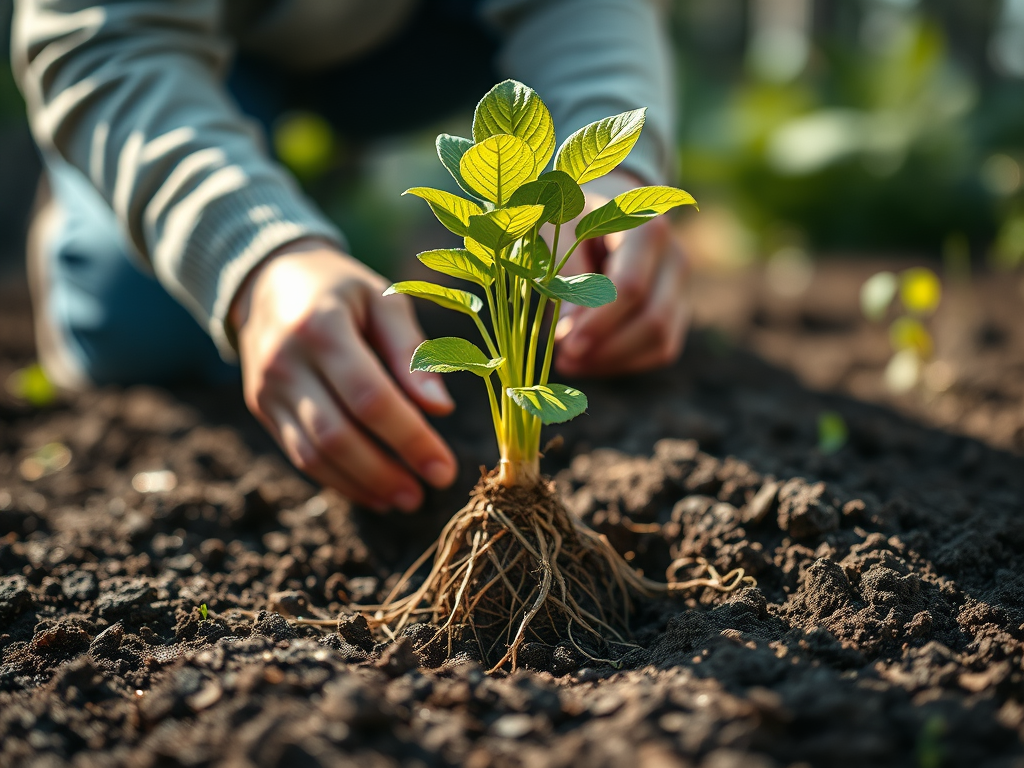
In this guide…

A Guide to Bare Root Planting
When it comes to cultivating a garden or nurturing an edible landscape, the process of selecting and planting the right flora is paramount.

Amidst the various options, one often overlooked gem in the realm of gardening are bare root plants and trees.
Far from being a niche technique, bare root planting offers a myriad of benefits, both for the plants themselves and for those who tend to them.

Below we’ll review the advantages of bare root planting and unveil a simple yet effective 5-step process for ensuring planting success.

The Benefits of Bare Roots
Cost-Effectiveness
Bare root plants and trees are typically more affordable than their potted counterparts.
Without the need for bulky containers and excessive soil, nurseries can offer these plants at a lower cost, making them an attractive option for the budget-conscious gardener.

Healthier Root Systems
Unlike potted plants that often experience root circling or binding, bare root specimens boast naturally developed root systems.

This encourages stronger root growth upon planting, enabling the plants to establish themselves more effectively in their new environment.
Ease of Transport & Planting
Handling bare root plants is significantly easier compared to their potted counterparts.


With reduced weight and volume, transporting and maneuvering these plants is a breeze.
Additionally, bare root planting eliminates the need to disentangle roots from pots, simplifying the planting process.
Seasonal Flexibility
Bare root plants are typically available during the dormant season, which aligns with the optimal time for planting in many regions.

This seasonal synchrony allows you to establish your landscapes with minimal stress on the plants, maximizing your chances of successful growth.
Environmental Friendliness
Embracing bare root planting promotes sustainability by minimizing the consumption of plastic pots and potting soil.

Furthermore, the reduced weight and volume of bare root plants translate to lower carbon emissions during transportation, contributing to a greener gardening approach.
5-Steps for
Bare Root Planting
Step 1: Selection
Choose bare root plants from reputable nurseries, ensuring they are healthy and free from any signs of disease or damage.

Step 2: Preparation
Before planting, soak the bare roots in water for a few hours to rehydrate them and stimulate growth.

Step 3: Digging
Dig a hole wide and deep enough to accommodate the plant’s roots without bending or crowding.
Loosen the soil at the bottom of the hole to facilitate root penetration.


Step 4: Planting
Gently spread the roots in the planting hole, ensuring they are positioned naturally and not twisted or bent.
Backfill the hole with soil, pressing it firmly around the roots to eliminate air pockets.


Step 5: Maintenance
Water the newly planted bare root thoroughly to settle the soil around the roots.

Mulch the area to retain moisture and suppress weed growth, and monitor the plant’s progress, providing additional care as needed.


Embracing Bare Root Success
By following this straightforward 5-step process, you can unlock the full potential of bare root planting while reaping its numerous benefits.
From cost-effectiveness to environmental sustainability, bare root plants offer a compelling alternative for creating thriving landscapes.

So, the next time you embark on a gardening journey, consider the untapped potential of bare root planting—it might just be the key to cultivating a flourishing food forest with ease and efficiency.
More Guides


Leave a Reply