
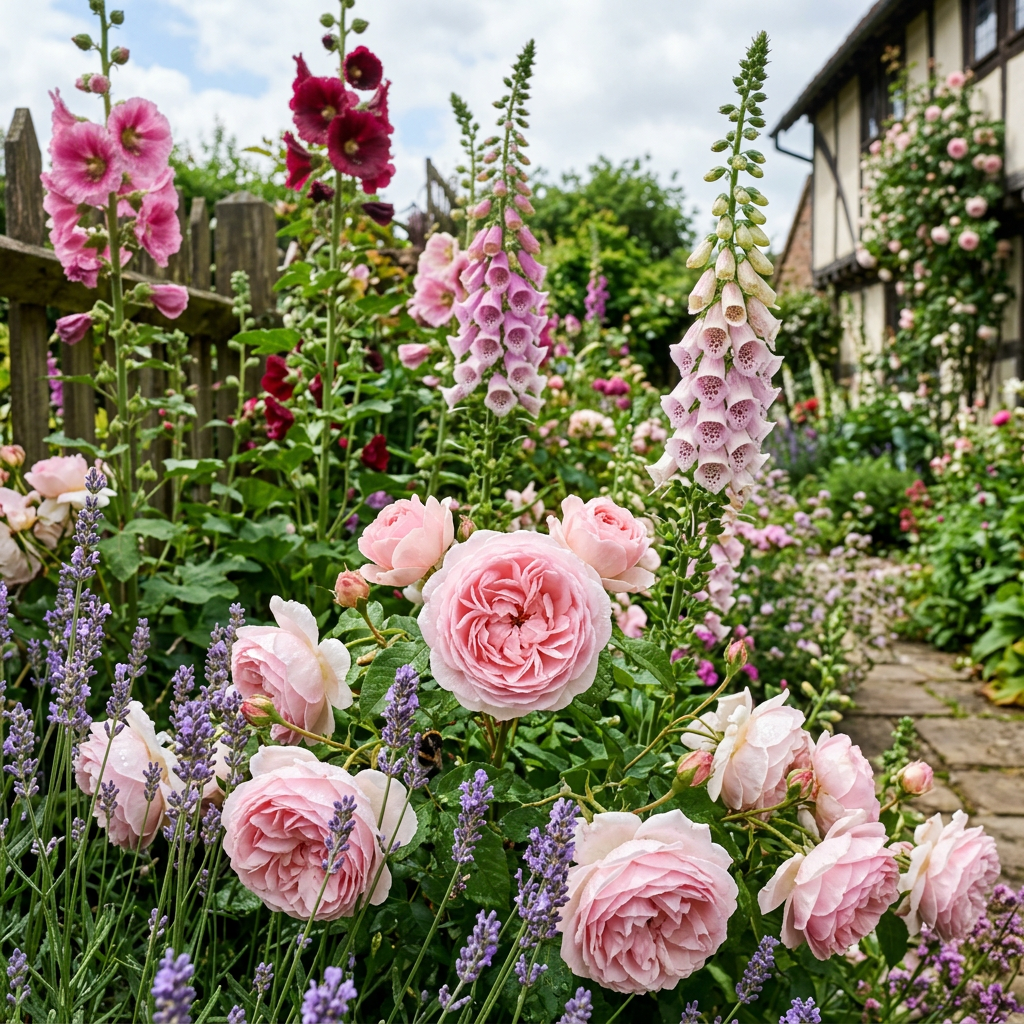
🌸✨ How to Design A Cottage Garden ✨🌿

A Complete Guide to Creating a Romantic, Abundant, Storybook Garden
There’s something magical about a cottage garden. 🌼 It feels soft, overflowing, romantic, and full of life. Flowers spill onto pathways. Bees hum lazily between blooms. Herbs mingle with roses. Vegetables peek out from behind hollyhocks. 🍅🌸
A cottage garden isn’t stiff or formal. It’s not minimal. It doesn’t try to be perfect.
It feels like home. 🤍
If you’ve ever dreamed of designing a lush, abundant space that looks like it grew there naturally over time — this guide will walk you through exactly what a cottage garden is and how to design one from scratch (or transform your current garden into one). Let’s dig in. 🌿✨
🌷 What Is a Cottage Garden?
A cottage garden is an informal, densely planted garden style that combines flowers, herbs, fruits, and vegetables in a relaxed, romantic layout.
Traditionally, cottage gardens began in rural England centuries ago. They were practical spaces where families grew food and medicinal herbs — but over time, they became known for their charming mix of ornamentals and edibles all tangled together in beautiful abundance.
When you picture:
- Climbing roses over a gate 🌹
- Tall hollyhocks swaying against a fence 🌸
- Lavender lining a winding path 💜
- Bees buzzing through foxglove 🐝
You’re picturing a cottage garden.

🌿 Key Characteristics of a Cottage Garden
🌸 1. Abundance & Density
Plants grow close together. The soil is rarely visible. Everything feels full and layered.
🌷 2. Informal Layout
Curved paths. Natural shapes. Nothing too symmetrical or rigid.
🥕 3. Flowers + Food Together
Vegetables, herbs, and flowers are mixed instead of separated into zones.
🐝 4. Pollinator-Friendly
Bees, butterflies, birds, and beneficial insects are welcomed.
🪵 5. Rustic Elements
Wooden gates, arbors, trellises, stone paths, picket fences.
🌼 6. Romantic, Old-Fashioned Flowers
Classic blooms dominate the palette.

🌹 Classic Cottage Garden Plants
While plant choices depend on your climate, here are timeless cottage garden favorites:
🌸 Perennials
- Coneflower
- Shasta daisy
- Peonies
- Delphinium
- Foxglove
- Lavender
- Salvia
- Yarrow
🌷 Annuals
- Zinnias
- Cosmos
- Sweet peas
- Calendula
- Snapdragons
🌹 Roses
- Climbing
- Shrub
- English-style
🌿 Herbs
- Thyme
- Rosemary
- Sage
- Chamomile
- Mint
🥬 Edibles
- Kale
- Lettuce
- Tomatoes
- Strawberries
- Chard

🏡 Step-by-Step:
How to Design a Cottage Garden
✨ Step 1: Start With the Feeling
Before you plant a single flower, define your vibe.
Ask yourself:
- Do I want soft pastels or bold color?
- Do I love pink and purple tones? 🌸💜
- Do I want a white moon garden? 🤍
- Do I want something wild and colorful? 🌈
Cottage gardens can be romantic and muted or bright and joyful. Choose a color palette to guide you.
🗺️ Step 2: Create a Loose Layout
Unlike formal gardens, cottage gardens are not grid-based.
Instead:
- Add curved pathways
- Create small “garden rooms”
- Include focal points (bench, arbor, birdbath)
Sketch your space:
- Where will tall plants go?
- Where will climbing vines live?
- Where can you tuck herbs near paths?
Think cozy and layered.
🌳 Step 3: Layer Your Plants
🌲 Back Layer (Height)
- Hollyhocks
- Sunflowers
- Climbing roses
- Delphinium
🌿 Middle Layer
- Coneflowers
- Shasta daisies
- Salvia
- Herbs
🌼 Front Layer
- Alyssum
- Creeping thyme
- Strawberries
- Low-growing annuals
Layer by height AND bloom time to ensure continuous color.
🌺 Step 4: Embrace Controlled Chaos
Cottage gardens look wild — but they are intentionally designed. Instead of planting in straight lines:
- Plant in drifts or clusters
- Repeat plant types throughout
- Let things self-seed
Repetition creates harmony even in “chaos.”
🌹 Step 5: Add Vertical Interest
Vertical elements make the space feel immersive. Climbing roses, sweet peas, and clematis thrive here. Consider adding vertical support for these plants.
Add:
- Arbors 🌿
- Trellises
- Obelisks
- Fencing
- Climbing vines
🪴 Step 6: Mix Edibles With Ornamentals
This is where cottage gardens shine.
Plant:
- Kale between roses
- Lettuce under taller blooms
- Strawberries along paths
- Tomatoes behind flowering borders
This creates beauty AND abundance.
🐝 Step 7: Support Pollinators
Plant nectar-rich blooms throughout the season.
Include:
- Early spring flowers
- Mid-season blooms
- Late-season nectar sources
Avoid pesticides whenever possible. Healthy cottage gardens buzz with life.
🌸 Designing for Blooms All Season Long
To keep your cottage garden colorful from spring to frost:
🌷 Early Spring
- Tulips
- Daffodils
- Hyacinth
- Primrose
🌼 Late Spring
- Peonies
- Iris
- Columbine
🌻 Summer
- Zinnias
- Roses
- Lavender
- Echinacea
🍂 Fall
- Asters
- Sedum
- Ornamental grasses
Layer bloom times so something is always happening.
🪵 Hardscape Elements That Elevate the Look
Cottage gardens feel old-world where classic touches help to elevate the space and imperfection adds charm.
Consider Adding:
- Stone pathways
- Gravel walkways
- Picket fences
- Rustic gates
- Weathered wood benches
- Clay pots
🌿 Cottage Garden Color Schemes
Here are some dreamy combinations:
💕 Romantic Blush
Pink, cream, lavender, soft yellow
💜 English Purple
Lavender, salvia, foxglove, white roses
🌈 Wild & Cheerful
Zinnias, cosmos, sunflowers, snapdragons
🤍 Moon Garden
White roses, white cosmos, dusty miller, silver foliage. Choose 3–5 core colors and repeat them throughout.
🌻 Small Space? You Can Still Create One!
Even a small yard can become a cottage garden where small spaces can feel especially magical when layered densely.
Tips:
- Use vertical space
- Grow in containers
- Use dwarf varieties
- Pack plants closely
- Let vines climb fences
🌿 Maintenance: Keeping It Beautiful (Without Stress)
Cottage gardens are not “plant it and forget it.” It’s a living, evolving system.
But they are forgiving.
Weekly Tasks:
- Deadhead spent blooms 🌸
- Harvest herbs and veggies 🥕
- Check for overcrowding
- Support tall stems
Seasonal Tasks:
- Divide perennials
- Add compost
- Save seeds
- Cut back perennials in fall
🐝 Why Cottage Gardens Are Incredible for Ecosystems
Because they mix plant types and bloom times, they:
- Support pollinators
- Improve biodiversity
- Reduce pest outbreaks
- Build soil health
- Provide food security
🌷 Cottage Garden vs. Formal Garden
| Cottage Garden | Formal Garden |
|---|---|
| Curved lines | Straight lines |
| Mixed plants | Separated beds |
| Dense planting | Spaced planting |
| Relaxed vibe | Structured design |
| Self-seeding welcome | Precision maintained |
If you love order and symmetry, you may prefer formal design. If you love romance and abundance, cottage is for you.
🌸 Common Mistakes to Avoid
🚫 Planting without a height plan
🚫 Ignoring bloom timing
🚫 Choosing too many random colors
🚫 Not repeating plant varieties
🚫 Forgetting pathways
🚫 Underwatering dense beds
✨ How to Start This Season
(Simple Action Plan)
- Choose your color palette 🎨
- Sketch a loose layout ✏️
- Pick 5–7 core perennials 🌿
- Add 3–5 annual fillers 🌸
- Include 3 edible plants 🥬
- Install one vertical feature 🌿
- Mulch heavily
🌼 Cottage Gardens Through the Seasons
🌷 Spring
Fresh bulbs and new growth. Pastels shine.
☀️ Summer
Peak abundance. Roses climbing. Bees everywhere.
🍂 Fall
Seed heads, dried textures, rich tones.
❄️ Winter
Structure from trellises and dormant perennials. Cottage gardens are never truly empty.
🌿 Budget-Friendly Tips
Cottage gardens thrive on patience and time.
- Start from seed
- Divide existing perennials
- Swap plants with friends
- Use salvaged materials
- Let plants self-seed
🌿 Is a Cottage Garden Right for You?
Choose this style if you:
- Love flowers
- Don’t mind a little wildness
- Want food + beauty together
- Enjoy seasonal change
- Like gardening hands-on
It may not be ideal if you:
- Prefer ultra-minimal landscapes
- Want low-maintenance only
- Need wide open lawn space
🌷 Final Thoughts: Grow Beauty Boldly
Designing a cottage garden is less about perfection and more about passion.
You don’t build it overnight — you grow into it. 🌿
It evolves each year.
It self-seeds.
It surprises you.
Start small.
Plant densely.
Layer thoughtfully.
Let it spill over.
And most importantly…
Let it feel like you. 🌸🤍✨


Leave a Reply